
The Product Thinking Behind Apple Music AutoMix

You can also listen to an audio discussion of this case study here: Podcast Link
1. Why This Feature Is More Interesting Than It Looks
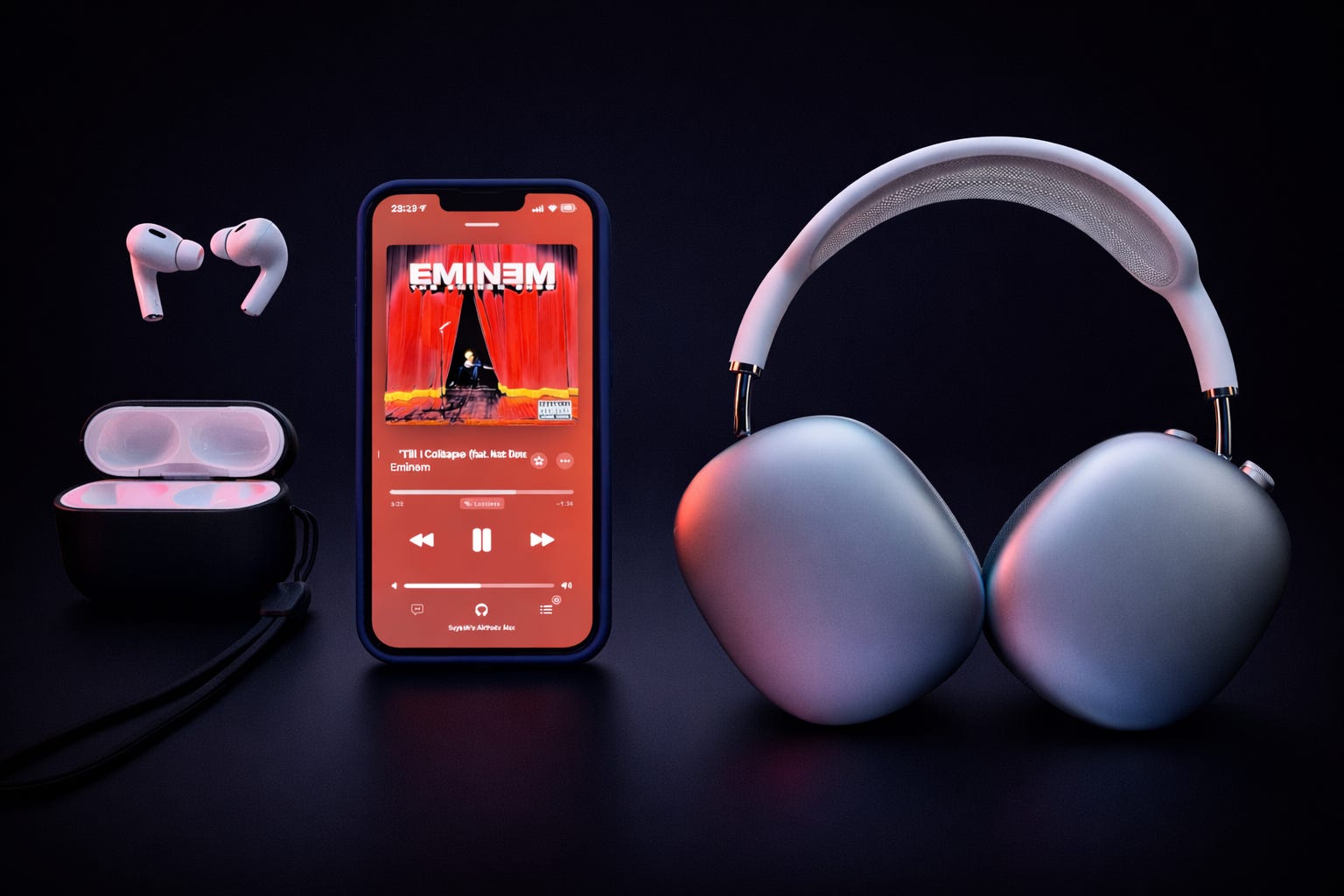
I was at the gym this past Monday, grinding through my last set of bench presses. Headphones on. Till I Collapse blasting.
Ninth rep. And I was done. Or at least I thought I was.
Then something subtle happened in my headphones.
Till I Collapse started to blend into Lose Yourself. No pause. No silence. Just a slow, intentional transition. And suddenly Eminem is in my ears again - “One shot. One opportunity…”
I smiled.
Four seconds ago, I was ready to quit. Now I was hitting the tenth rep.
That moment - that extra push - is what I believe the Apple Music product team envisioned with AutoMix. And honestly, they have nailed it.
At first glance, AutoMix looks like a fun audio trick. It isn’t.
What it actually does is quietly, without calling attention to itself, removes a tiny but critical interruption: the few seconds where your brain asks, “What should I play next?”
Instead of decision-making, Apple replaces that gap with anticipation. A smooth, energetic handoff from one song to the next.
As a Product Manager, I’m confident the goal here was never “better transitions.” That would have been the lowest-hanging fruit (and Apple doesn’t ship those).
What Apple focused on was something deeper: energy continuity.
Even a few seconds of silence can break momentum, kill immersion, and reduce engagement. Shuffle and playlists have plateaued. Manual curation is friction. Context switching is the enemy.
AutoMix is Apple acknowledging that in today’s products, the margins matter, and sometimes removing silence is more powerful than adding features.
2. The Apple Way of Solving It
The obvious approach would have been to make AutoMix a visible feature - a “DJ mode” or a dedicated AutoMix section that users consciously interact with.
But Apple rarely does that.
Instead, they made AutoMix feel like it was always supposed to be there - quietly improving the listening experience without demanding attention. It reminds me of OTP auto-fill on iPhones: simple, almost invisible, but incredibly effective once you notice it.
Apple has long had a bias toward making intelligence feel invisible. The best Apple features don’t ask you to learn them, they just remove friction from experiences you already have.
AutoMix fits perfectly into that philosophy.
It feels less like a growth feature and more like a craft feature. The kind that comes from a team paying attention to experience details most users never explicitly complain about.
3. Why Now?
AutoMix is also a “right-time” feature. It likely couldn’t have existed in this form three to five years ago.
Real-time audio processing and on-device machine learning are now fast and efficient enough to make transitions feel instantaneous. At the same time, streaming UX innovation has plateaued. The good old playlists, shuffle, and recommendations are already mature.
That shifts the frontier from what to play → how listening feels.
Combined with Apple’s hardware-software integration advantage, AutoMix feels less like a new feature and more like a capability that only recently became possible.
4. Not a Feature but A Capability
The more I think about AutoMix, the more it feels less like a feature and more like a capability Apple has developed.
What Apple really built isn’t just smoother song transition, it’s the ability to understand tempo, energy, and structure of music in real time and adapt playback accordingly. Automix is simply one visible expression of that capability.
And once a capability like this exists, it rarely stays confined to a single feature.
The same foundation could power:
smarter workout playlists
context-aware music transitions while driving
adaptive DJ-style listening experiences
tools for artists and creators
In that sense, AutoMix feels less like a destination and more like an early signal of where Apple Music experiences could go next.
5. Trade-offs Apple Quietly Accepted
AutoMix isn’t perfect, and it doesn’t need to be.
Apple appears to have made a deliberate trade-off: accept occasional imperfect transitions in exchange for maintaining continuity. The alternative, silence between songs, is predictably worse for immersion.
This is a classic product decision: optimize for overall experience quality, not edge-case correctness.
There’s also a deeper trade-off at play: artist intent versus listener experience.
Songs are produced with deliberate beginnings and endings. Silence can be part of artistic expression. AutoMix slightly reshapes that boundary by treating music less like individual tracks and more like a continuous experience.
Push too far, and remixing could feel intrusive. Stay too conservative, and the feature loses its value.
AutoMix today feels like Apple testing that boundary carefully.
6. What I’d Watch If I Were on the Team
If I were on the Apple Music team, I wouldn’t just watch feature adoption - I’d watch behavioral signals of continuity.
First, I’d look at listening session length and songs per session. If AutoMix is working, sessions should naturally become longer because fewer moments of silence interrupt momentum.
Second, I’d track manual interventions during listening:
song skips
manual song selection
search actions mid-session
A reduction in these behaviors would suggest the system is doing a better job maintaining flow.
Third, I’d pay attention to failure perception, not just usage. Even if transitions are technically correct, a few noticeably “wrong” remixes could disproportionately affect user trust.
Finally, I’d watch where AutoMix works best:
workouts
driving
focus listening
background sessions
These contexts likely benefit most from continuity and could guide future investments.
Apple Music’s latest innovation called AutoMix is a reminder that meaningful product innovation doesn’t always come from new surfaces or bold features. Sometimes it comes from noticing small moments where experiences break, and quietly fixing them.
This isn’t just about remixing songs. It’s about maintaining momentum, reducing friction, and making listening feel uninterrupted.
Strong product teams don’t just ship features - they build capabilities that make experiences feel effortless.
AutoMix may look small on the surface, but it signals something bigger: Apple Music is starting to optimize not just for what you listen to, but how listening feels.